
Amsterdam Canal Cruise: What Amsterdam's Tilting Houses Reveal About 17th Century Life
Discover the fascinating history and architecture of Amsterdam's 17th century canal houses. Explore how these iconic leaning buildings reveal the city's Golden Age prosperity, clever construction methods, and preservation efforts. Plan your Amsterdam canal cruise and step back in time with a visit to Museum Van Loon and the UNESCO-listed canal belt.
2/28/202613 min read
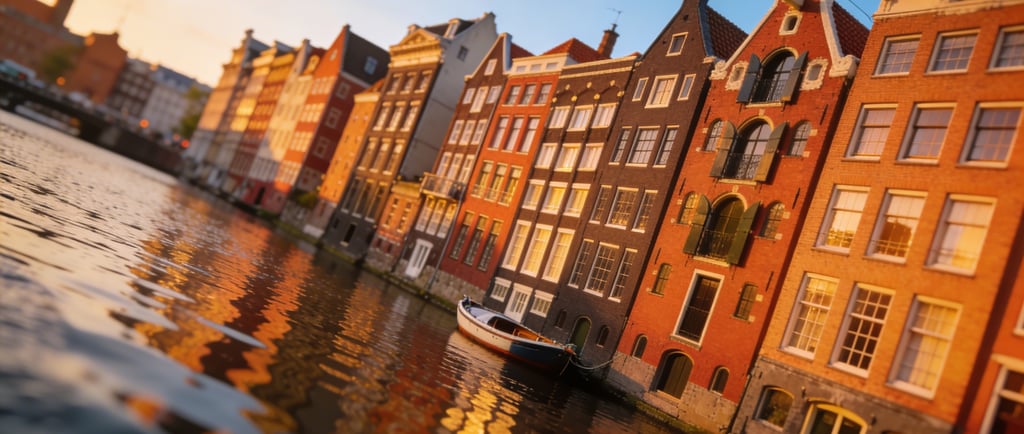
Amsterdam’s crooked canal houses aren’t architectural mistakes – they’re windows into how people lived during the Dutch Golden Age. These Amsterdam tilting houses tell fascinating stories about 17th century Dutch architecture, construction challenges, and the booming economy that shaped the Netherlands.
This guide is perfect for history buffs, architecture enthusiasts, and curious travelers who want to understand what those Amsterdam leaning buildings really mean. You’ll discover why these historic Amsterdam houses lean at such dramatic angles and what their unique designs reveal about daily life centuries ago.
We’ll explore the clever construction methods Dutch builders used to work with Amsterdam’s soggy soil, plus how wealthy merchants used their tilting homes to show off their status. The creation of the Amsterdam Canal Belt was a major urban development project in the 17th century, involving the expropriation of land, raising of funds, and systematic design of different areas for specific functions, all reflecting the city’s rapid expansion and economic growth. You’ll also learn how these Dutch Golden Age buildings reflect the economic boom that made Amsterdam a global trading powerhouse – and what the interior layouts tell us about how families actually lived in these narrow, towering homes.
History of the Canal Belt
The Amsterdam canal belt, or “Grachtengordel,” is one of the world’s most remarkable urban achievements, with a history stretching back to the 17th century. Conceived during a period of explosive growth, the canal belt was meticulously planned to accommodate Amsterdam’s booming population and thriving trade. The construction of the three main canals—Herengracht, Keizersgracht, and Prinsengracht—transformed the city, creating a network of waterways that not only facilitated the movement of goods but also defined the city’s unique architectural style.
Each canal was carefully dug and lined with rows of narrow, deep houses, their elegant facades reflecting the wealth and ambition of Amsterdam’s merchant class. The design of these canal houses was shaped by both necessity and ingenuity: limited land meant building upward and maximizing every foot of frontage, while the ornate gables and decorative details showcased the prosperity of their owners. The canal belt’s layout, with its concentric rings and radiating streets, became a model for urban planning around the world.
Today, the Amsterdam canal belt stands as a living testament to the city’s rich past. Its picturesque canals and historic houses draw millions of visitors each year, offering a glimpse into the ingenuity and vision that made Amsterdam a global center of commerce and culture. Whether you’re admiring the deep, narrow facades from a boat or strolling along the water’s edge, the canal belt’s history is woven into every brick and reflection.
The Golden Age
Amsterdam’s Golden Age, spanning roughly from 1580 to 1700, was a time when the city emerged as a powerhouse of trade, culture, and innovation. The wealth generated by global commerce fueled a construction boom along the famous canals, with grand canal houses and stately mansions rising to accommodate the city’s prosperous merchant families. These canal houses, with their richly decorated facades and distinctive gables, became symbols of status and success, each one telling a story of ambition and achievement.
The architectural style of the period, known as the Amsterdam Renaissance, is instantly recognizable: red brickwork, horizontal stone bands, and ornate gable tops that crowned the skyline. The city’s construction frenzy wasn’t just about homes—warehouses, offices, and public buildings sprang up along the canals, creating a vibrant urban landscape that reflected the energy of the era.
But the Golden Age was about more than just buildings. It was a time of artistic and intellectual flourishing, with painters like Rembrandt and Vermeer capturing the spirit of the city in their masterpieces. The canals themselves became stages for daily life, commerce, and celebration. Today, exploring Amsterdam’s canal belt is like stepping back into this golden era—every mansion, every reflection in the water, and every intricate facade is a reminder of the city’s extraordinary past.
Understanding Why Amsterdam's Historic Houses Lean and Tilt
The role of soft clay soil in Amsterdam's foundation challenges
Amsterdam's historic canal houses rest on some of the most challenging soil conditions in Europe. The city sits on a foundation of soft, waterlogged clay and peat that extends down dozens of meters below street level. This marshy ground, formed over thousands of years by river deposits and decomposed organic matter, creates a constantly shifting base that can't properly support heavy stone structures.
The soft clay soil acts like a wet sponge under pressure. When weight is applied from above, the clay compresses and shifts, causing buildings to settle unevenly. This natural instability means that even the most carefully constructed Amsterdam tilting houses face ongoing structural challenges. The clay's high water content makes the problem worse, as moisture levels change with seasons and water management throughout the city.
Dutch builders in the 17th century understood these soil limitations intimately. They developed specialized techniques to work with, rather than against, these difficult ground conditions. The Amsterdam canal houses we see today represent centuries of trial and error in foundation engineering, with each generation of builders learning from the structural movements of previous constructions.
How wooden pile construction methods created structural instability
The solution to Amsterdam's soft soil problem came in the form of wooden pile foundations - a technique that became the backbone of Dutch Golden Age buildings. Builders drove thousands of wooden posts, typically made from Scandinavian pine or oak, deep into the ground until they reached a more stable sand layer, sometimes 15-20 meters below the surface.
Each Amsterdam leaning building sits on anywhere from dozens to hundreds of these wooden piles. A typical canal house might rest on 200-300 wooden posts, each about 30-40 centimeters in diameter. The piles were driven close together and topped with a wooden platform that distributed the building's weight across the entire foundation system.
While ingenious for its time, this wooden pile system had inherent weaknesses. Wood naturally degrades over time, especially when exposed to changing moisture levels. As Amsterdam's water table fluctuated due to urban development and canal management, some piles would rot while others remained stable. This uneven deterioration caused buildings to settle at different rates, creating the characteristic lean we see in historic Amsterdam houses today.
The spacing and quality of individual piles also varied based on available materials and construction budgets. Wealthier merchants could afford more piles placed closer together, while middle-class homes might have fewer foundation posts. These differences in foundation density contributed to varying degrees of structural movement over the centuries.
The impact of centuries of settlement and shifting ground
Time has amplified the original structural challenges faced by 17th century Dutch architecture. Over 400 years, the combined effects of foundation settling, soil compression, and urban development have created the distinctive tilting profile that defines Amsterdam's historic building techniques.
The process happens gradually but relentlessly. As wooden piles deteriorate at different rates, buildings begin to shift and lean. Some houses tilt forward toward the canal, others lean to one side, and many develop complex multi-directional movements. The weight of neighboring buildings, changes in groundwater levels, and even vibrations from modern traffic all contribute to ongoing structural changes.
Canal maintenance and urban infrastructure projects have also affected building stability. When the city dredges canals or installs new utility systems, the disruption can accelerate settling in nearby structures. The interconnected nature of Amsterdam's foundation systems means that work on one building often impacts its neighbors.
Modern monitoring shows that some historic Amsterdam houses continue to move measurably each year. While engineers have developed techniques to stabilize the most at-risk buildings, the natural settling process continues. This ongoing movement is simply part of living with Amsterdam's unique geological conditions - a reality that 17th century residents accepted as the price of building their prosperous city on such challenging ground.
Architectural Solutions That Defined 17th Century Dutch Building
Forward-leaning facades designed for practical goods transportation
The distinctive forward lean of Amsterdam's historic canal houses wasn't a design flaw—it was pure genius. Merchants deliberately built their houses to tilt outward by several degrees to create clearance for hoisting goods to upper floors. This intentional forward slant meant heavy cargo could swing freely from the loading beam without scraping against the building's facade or crashing through expensive glass windows.
The angle also served another clever purpose: rainwater naturally flowed away from the building's foundation, protecting the structure from water damage in a city where managing moisture was already a constant battle. Master builders of the Dutch Golden Age calculated these angles precisely, typically creating a lean of 1-2 degrees from vertical—enough to be functional without compromising structural integrity.
Narrow lot construction maximizing valuable canal-front property
At the back of many canal houses, private gardens—often containing garden houses—are hidden from street view, offering a secluded green retreat in the heart of the city. A person walking through a canal house can personally observe the unique, narrow layout and experience the sense of discovery as they move from the bustling street to the tranquil, hidden gardens, fully immersing themselves in the historical and cultural atmosphere.
Pulley systems and loading beams for efficient cargo handling
Every Amsterdam canal house featured a prominent loading beam jutting from its top floor, equipped with sophisticated pulley systems that transformed residential buildings into efficient cargo-handling facilities. These beams, called "hijsbalk" in Dutch, could support enormous weights—often several tons—making it possible to lift everything from grain sacks to furniture directly from canal barges to upper-floor storage areas.
The pulley systems represented cutting-edge engineering for their time. Merchants invested in high-quality rope, bronze pulleys, and reinforced beam construction because efficient cargo handling directly impacted their bottom line. Many of these historic Amsterdam houses still retain their original loading beams today, though they're now more likely to help residents move furniture than handle maritime cargo.
Canal house design reflecting maritime commerce needs
The entire layout of Amsterdam canal houses reflected the city’s maritime economy. Ground floors typically served as shops or offices, while upper floors provided both family living space and crucial storage for goods awaiting shipment. The attic was often used for storage and trade, typically equipped with hoist beams and pulley systems to lift goods from the street or canal below. The steep, narrow staircases that characterize these buildings were designed to accommodate the flow of both people and cargo.
Windows grew larger on upper floors to provide natural light for examining merchandise and conducting business. Many houses included specialized storage features like climate-controlled cellars for wine and spirits, reinforced floors for heavy goods, and strategic placement of rooms to separate family life from commercial activities. Over the centuries, the interior of most Amsterdam canal houses has been renovated, with few retaining their original 17th-century designs. This integration of residential and commercial space made Dutch Golden Age buildings incredibly efficient for the merchant families who built Amsterdam’s prosperity during the 17th century Netherlands’ golden period.
Social Status and Wealth Display Through House Design
Height and ornamentation indicating merchant family prosperity
The skyline of Amsterdam's historic canal district tells the story of merchant ambitions reaching skyward. During the Dutch Golden Age, successful traders competed fiercely to build the tallest, most ornate houses money could buy. These Amsterdam tilting houses became vertical billboards of success, with each additional story declaring the owner's growing fortune.
Wealthy merchants adorned their facades with intricate stonework, elaborate cornices, and detailed window frames carved from expensive sandstone imported from Germany. The most prosperous families commissioned master craftsmen to create ornamental elements that would catch the eye of every passerby. Decorative shutters painted in rich colors, gilded details catching sunlight, and sculptural elements depicting trade symbols transformed these 17th century Dutch architecture masterpieces into works of art.
The height restrictions imposed by Amsterdam's building codes made every extra floor a precious commodity. Merchants paid premium prices to construct houses that towered above their neighbors, creating the dramatic rooflines we see today. The investment was substantial – taller buildings required stronger foundations and more sophisticated engineering, but the social payoff was immense.
Canal proximity determining property value and social standing
Location defined everything in Amsterdam's rigid social hierarchy. The most coveted addresses lined the three main canals – Herengracht, Prinsengracht, and Keizersgracht – where Amsterdam's wealthiest merchants established their dynasties. Properties facing these prestigious waterways commanded astronomical prices, often ten times more expensive than houses on side streets.
The Herengracht, known as the "Golden Bend," became home to Amsterdam's most influential banking families and international traders. These Amsterdam canal houses history reveals how proximity to water meant proximity to power – ships could dock practically at the front door, making business transactions swift and convenient. The closer to the canal, the higher the social status and the more elaborate the house design became.
Merchants understood that a prestigious canal address opened doors to exclusive social circles, lucrative business partnerships, and advantageous marriages for their children. The address itself carried weight in negotiations, with business partners viewing canal-front property owners as more trustworthy and financially stable.
Gable styles revealing occupant profession and economic position
The distinctive gable tops crowning Amsterdam’s historic Amsterdam houses functioned as sophisticated social indicators, revealing both the owner’s profession and economic standing. Each gable style carried specific meanings that educated observers could read like a business card carved in stone.
Step gables, with their distinctive stair-like silhouettes, typically belonged to established merchants involved in the spice trade or textile business. These elaborate constructions required skilled masons and expensive materials, marking their owners as serious players in Amsterdam’s commercial world. Bell gables, with their curved, elegant lines, often housed successful artists, publishers, or luxury goods dealers who wanted to project refinement and cultural sophistication.
The neck gable, featuring a straight top with decorative elements, became popular among rising middle-class professionals – lawyers, doctors, and smaller-scale merchants who had achieved moderate success but hadn’t yet reached the upper echelons of society. These Dutch Golden Age buildings showcase how architectural choices reflected professional identity and aspirations.
Master craftsmen often incorporated profession-specific symbols into gable decorations. Ships’ wheels, anchors, and maritime motifs identified sea captains and shipowners, while books, quills, and scholarly instruments marked the homes of academics and publishers. The most successful merchants commissioned personalized coats of arms, transforming their Amsterdam leaning buildings into permanent monuments to their achievements.
Amsterdam’s leaning houses tell us a fascinating story about life in the 1600s that goes way beyond simple building problems. These tilted structures show us how the Dutch dealt with challenging marshy ground, how they built upward when space was tight, and how they turned practical needs into beautiful architecture. The way these houses lean forward wasn’t just about moving goods up and down - it was about showing off wealth, maximizing limited space, and creating a unique cityscape that still amazes visitors today.
Looking at these crooked buildings today gives us a direct connection to the daily lives of Amsterdam’s golden age residents. From the clever pulley systems that helped families haul their belongings to upper floors, to the narrow but tall designs that made the most of expensive canal-front property, every architectural choice reflects the ingenuity and prosperity of 17th century Dutch society. Next time you walk through Amsterdam’s historic streets, take a moment to really look at those tilting houses - they’re not just old buildings, but living reminders of how people lived, worked, and thrived hundreds of years ago.
If you don’t look closely, you might miss the hidden stories and historical details concealed within the canal houses and their secret spaces.
Exploring the Museum Van Loon
Tucked away on the elegant Keizersgracht, the Museum Van Loon offers a rare opportunity to step inside one of Amsterdam’s most beautiful 17th-century canal houses. Once home to the influential Van Loon family, this museum is a treasure trove of Golden Age history, architecture, and art. As you enter, you’re greeted by the grandeur of the neck gable—a hallmark of the period’s architectural style—before moving through rooms filled with period furniture, family portraits, and exquisite decorative objects.
The museum’s interior is a journey through time, with each floor revealing new details about the lives of Amsterdam’s elite. Climb the narrow stairs to the attic, where you can imagine the hustle and bustle of servants and merchants, or pause in the richly decorated salons to admire the craftsmanship of 17th-century artisans. The beautifully restored coach house and tranquil garden offer a peaceful escape from the city’s busy streets, showcasing the private world that once belonged to one of Amsterdam’s most prominent families.
A visit to the Museum Van Loon is more than just a lesson in history—it’s an immersive experience that brings the stories of Amsterdam’s canal houses to life. Whether you’re fascinated by architecture, intrigued by family history, or simply looking for a quiet spot to reflect, this museum is a must-see destination for anyone exploring the city’s rich heritage.
Types of Canal Cruises
No visit to Amsterdam is complete without experiencing the city from the water, and the variety of canal cruises on offer means there’s something for every traveler. Classic boat tours glide along the famous canals, offering panoramic views of the city’s historic architecture and lively streets. For those seeking a more immersive experience, themed cruises—such as wine and cheese tastings, dinner cruises, or even family-friendly adventures—add a unique twist to your journey through the canal belt.
One of the highlights of the year is the Amsterdam Light Festival, when the canals are transformed into a glowing wonderland of illuminated art installations. Special cruises during the festival let you enjoy the spectacle from the comfort of a heated boat, with many departure locations conveniently located near the city’s main attractions.
Booking a canal cruise is easy, with options for free cancellation and discounts when you reserve online. Whether you’re interested in the city’s history, its stunning architecture, or simply want to relax and take in the sights, a canal cruise is the perfect way to see Amsterdam from a new perspective. With knowledgeable guides, audio tours, and a variety of boats to choose from, you’ll discover why the canals are the heart and soul of this vibrant city.
Preservation Efforts: Safeguarding Amsterdam’s Architectural Heritage
Amsterdam’s canal houses are more than just picturesque backdrops for a canal cruise—they are living monuments to the city’s vibrant past. The Amsterdam canal belt, recognized as a UNESCO World Heritage site, is lined with these iconic 17th century houses, each one telling a unique story of the city’s rise during the Dutch Golden Age. Preserving this architectural heritage is a top priority for Amsterdam, ensuring that the world can continue to experience the city’s original style and history for generations to come.
A combination of strict regulations and passionate local initiatives helps protect the canal belt’s historic character. Restoration projects focus on maintaining the authentic architectural style of these canal houses, from their distinctive gables to their deep, narrow facades. Specialized craftsmen use traditional materials and techniques to repair everything from centuries-old brickwork to ornate window frames, ensuring that each building retains its original charm.
One of the best places to witness these preservation efforts in action is the Museum Van Loon. Located on the elegant Keizersgracht, this beautifully restored canal house offers visitors a glimpse into the refined world of Amsterdam’s merchant elite. The museum’s interiors are carefully decorated with period furniture, art, and family heirlooms, providing an immersive experience of 17th century life. Its lush garden and original stables further showcase the attention to detail that goes into maintaining these historic houses.
Thanks to ongoing preservation work, the Amsterdam canal belt remains a vibrant, accessible part of the city’s daily life. Whether you’re strolling along the famous canals, exploring a museum, or simply admiring the facades from a boat tour, you’re experiencing a piece of world history. These efforts ensure that Amsterdam’s unique architectural style and the stories of its canal houses continue to inspire visitors from around the globe. Many stories and historical elements are still waiting to be uncovered by curious visitors exploring the city.
Best Canal Cruises in Amsterdam
Explore Amsterdam’s beautiful canals with us.
© Grachtenfahrtamsterdam.com 2025. All rights reserved.
info@grachtenfahrtamsterdam.com
Discover the beauty of Amsterdam’s canals with our carefully curated selection of canal cruises. Enjoy exceptional service, high-quality experiences, and a smooth booking process with us.